Introduction: A City Left Behind
I was born in what was once the largest city in the world.
About 75 years ago, in late 2025, the United Nations estimated that nearly 42 million people lived in greater Jakarta. My grandparents remember an endless sprawl, brimming with energy, full of every sound and smell. Trains were crowded at dawn, roads were thick with cars, and sidewalks were all but impossible to navigate.
I was eleven when my family abandoned Jakarta for Nusantara, Indonesia's new capital on Borneo. By then, Jakarta’s northern districts flooded so often that maps changed from year to year. Pumps and sea walls protected some streets, while the waves consumed others.
Jakarta didn’t die. It was mutilated.
As people left, many neighborhoods were abandoned. Others were fortified against the waves. The city became even more unequal. Some blocks still resembled their old self. But not far away, others were empty, filled with crime – or water.
Soon, Jakarta was a shell of the city my grandparents were so proud to call home.
Today, global warming has finally leveled off. Earth’s average temperature is just under 3 °C higher than it was in the late 19th century.
That number sounds small. But it’s averaged across the entire planet, over multiple years. Much more warming has happened over land than in the water, or in the Arctic than at lower latitudes. Every summer brings deadly heatwaves, unprecedented floods or droughts, and cyclones that strengthen with terrifying speed.
But I often think that if the climate scientists who warned of catastrophe, a century ago, could see our world, they might have been relieved.
After all, industrial civilization has endured. Food production has recovered. Global greenhouse gas emissions have fallen to roughly net zero. Temperatures have stopped climbing. And the world’s population stands at about 10 billion.
There’s reason to hope that, after a century of crisis and decline, the coming century will be one of recovery and relief.
But the drowned streets of my hometown remind us that some things can never be restored. And that many who lost the most often could least afford to lose it.
This is a history of how humanity stabilized the climate – belatedly, when it was almost too late. And it’s a history of what could not be recovered once the warming stopped.
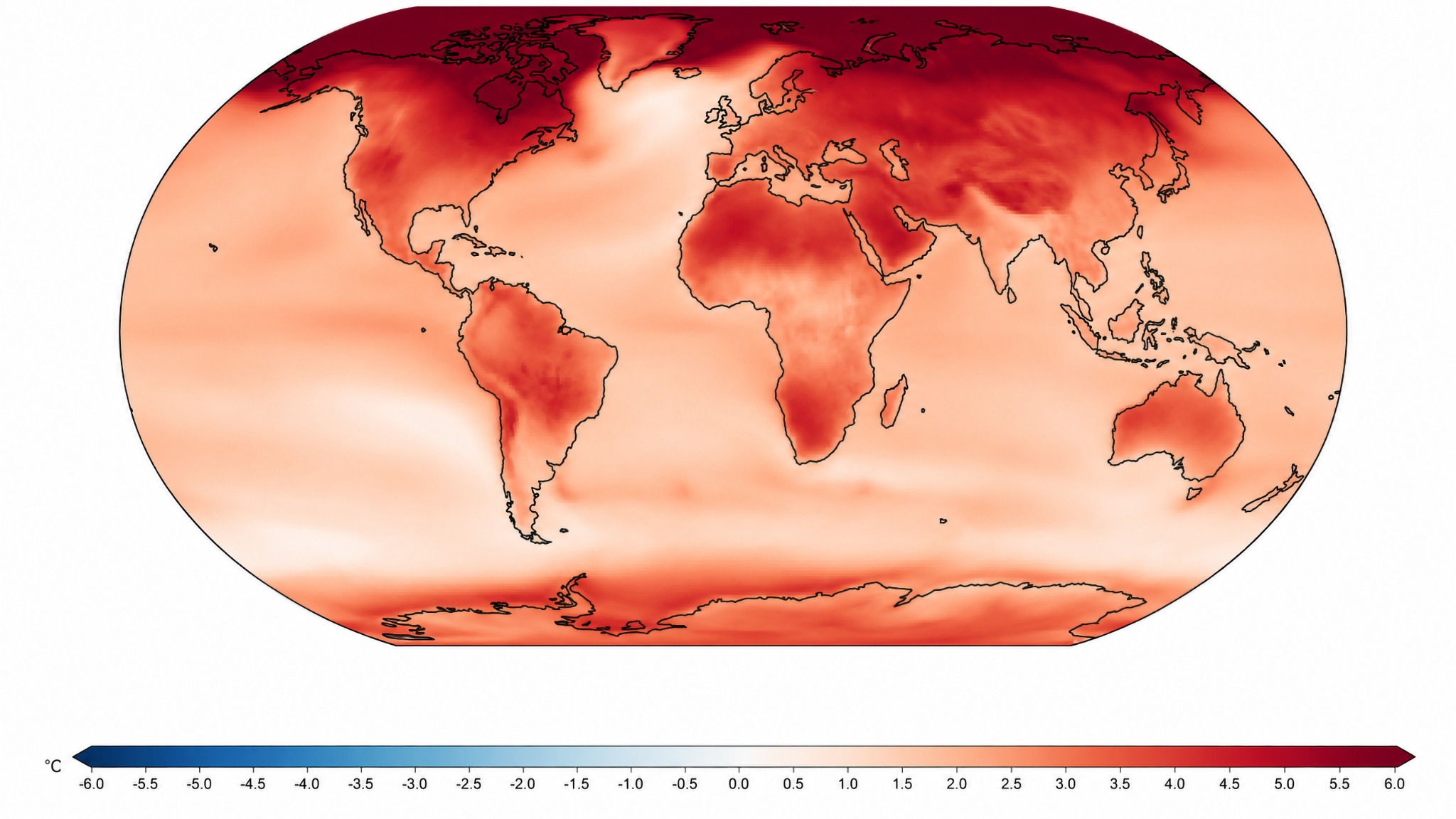
This map simulates regional temperature change when Earth has warmed by 3 °C, relative to its average temperature in the late nineteenth century. It is a modified version of an image obtainable from the IPCC WGI Interactive Atlas. Source: Intergovernmental Panel on Climate Change, “WGI Interactive Atlas,” accessed August 10, 2026.
2046-2055: The Great Climate Turn
The political transformation that eventually halted global warming began with the Great Hunger of 2045–46.
As every schoolchild knows, in 2044 an exceptionally powerful El Niño intensified drought and heatwaves in all of the world’s major food-producing regions. Harvest failures led to food shortages, and commodity prices surged to new highs. Malnutrition, famine, and ultimately starvation on an unprecedented scale combined with outbreaks of epidemic disease.
By 2046, an estimated 60 million people had died.
Climate change hadn’t caused the famine by itself. Soil degradation, depleted aquifers, fragile trade networks, simmering conflicts, and years of underinvestment all played a role. But climate change had clearly amplified the effects of a powerful El Niño that, in turn, synchronized regional droughts and heatwaves, turning agricultural vulnerabilities into a worldwide catastrophe.
In the wake of the Great Hunger, public outrage in many countries transformed decarbonization into an emergency program for food security, political stability, and human survival.
The transition away from fossil fuels did not depend on a single miraculous technology. Solar and wind power expanded fastest because they were already relatively cheap and could be installed quickly. Long-distance transmission lines carried electricity from sunny or windy regions to places where demand was highest. Batteries, pumped-storage hydroelectricity, thermal storage, and increasingly accurate weather forecasts – improved using ever more capable AI systems – helped grid operators match fluctuating supplies of renewable power with changing demand.
Existing nuclear plants were kept open beyond their originally planned retirement dates, and several countries built new large reactors. Small modular reactors – factory-produced nuclear units designed to be installed in stages – also played a narrow but still important role in the energy transition. They supplied industrial centers, isolated electricity grids, and countries that wanted reliable low-carbon power but could not afford the enormous initial cost of conventional nuclear plants.
Commercial fusion arrived late and remained expensive. Today, it still provides only a modest share of global electricity rather than serving as the foundation of the energy economy, but that share is poised to grow.
Fossil fuels disappeared first from electricity and ordinary road transport. Electric cars, buses, and railways were already common before the famine. After 2046, strict efficiency rules, carbon prices, and outright bans finished off the internal combustion engine. Fossil fuels were harder to eliminate from shipping, but new vessels increasingly harnessed the wind – just like sailing ships of old.
Long-distance aviation, steelmaking, and cement production proved hardest to decarbonize. Still, airlines gradually shifted toward low-carbon and synthetic fuels; steelmakers adopted electric furnaces and hydrogen; and cement producers relied on cleaner heat, alternative materials, and carbon capture.
Agriculture changed just as dramatically, but not in the way some had imagined. True, vertical farms and climate-controlled greenhouses became important sources of vegetables, seedlings, and high-value crops near wealthy cities. But they could never replace open fields that produced most of the world's rice, wheat, and maize.
Governments funded research into crops better able to survive heat and drought, as well as forecasts that gave farmers more warning of dangerous weather. They also helped farmers conserve water, rebuild depleted soils, and plant trees around fields and pastures to retain moisture and prevent erosion.
New rules reduced methane emissions from oil and gas production, livestock, and rice farming. Some required farmers to use less nitrogen fertilizer, and apply it more carefully. In many wealthy countries, meat consumption declined as alternative sources of protein became cheaper, tastier, and more widely available.
The changes were uneven. Wealthy states could subsidize new infrastructure and compensate workers in declining industries. Poorer countries, by contrast, often faced high borrowing costs, weak electrical grids, and growing populations.
The United Nations had long since ceased to be effective. But in 2049, the governments of China, the European Union, and the United States launched the Climate Recovery Compact, a multilateral agreement that tied debt relief and development finance to decarbonization and adaptation efforts in developing nations. The Compact was paternalistic, often corrupt, and periodically weakened by the outcome of elections. Still, it seems to have accelerated the energy transition across South and Southeast Asia, Africa, and Eastern Europe.
By the early 2060s, global carbon dioxide emissions were falling steeply. Emissions of all greenhouse gases, including methane and nitrous oxide, had clearly plateaued. Global warming seemed like a problem that was well on the way to being fixed.
2055-2085: Warming After the Turning Point
One of the hardest lessons of the past century was that falling emissions did not immediately mean falling temperatures.
Greenhouse gases accumulate in the atmosphere – especially carbon dioxide, which can take centuries or even millennia to be absorbed by oceans, soils, and rocks. As long as humanity released more carbon dioxide than Earth could absorb, its concentration in the atmosphere continued to rise. But power stations and vehicles that used fossil fuels couldn’t be replaced overnight.
So, the world kept warming long after the political turning point of 2046. And worse, the sensitivity of Earth’s climate to greenhouse gases turned out to be on the high range of what climate models had simulated.
By the 2050s, heatwaves of previously unimaginable duration and intensity were common across the Middle East, South Asia, North Africa, and the Sahel. The Persian Gulf states protected many of their citizens with reliable electricity, air conditioning, desalination, and imported food. But even there, outdoor work was dangerous for much of the summer, and migrant workers received less protection than citizens.
In poorer countries, heatwaves caused blackouts, crop failures, and mass mortality. Heat did not kill only by pushing the human body beyond its limits. It also worsened heart, kidney, and respiratory disease; reduced labor productivity; spoiled food and medicine; and made hospitals more likely to fail when they were needed most.
Water shortages sharpened political conflicts, even when they didn’t directly cause them. In Mali, Burkina Faso, Syria, and parts of the Horn of Africa, drought and erratic rainfall intensified competition over wells, grazing land, and irrigation. Armed groups exploited displacement and resentment.
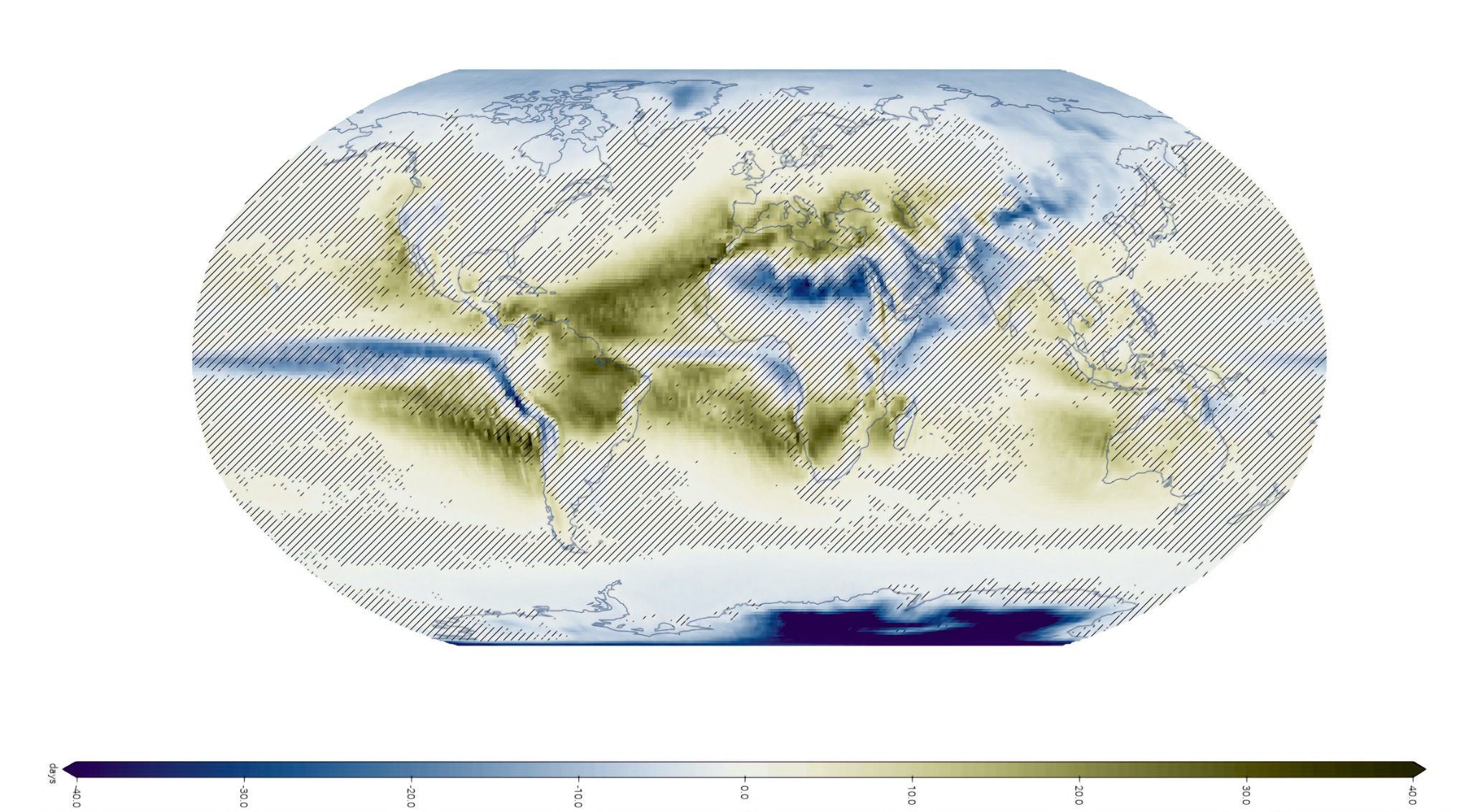
This map simulates changes in consecutive dry days when Earth has warmed by 3 °C, under scenario SSP5-8.5. The baseline is 1850–1900. It is a modified version of an image obtainable from the IPCC WGI Interactive Atlas. Source: Intergovernmental Panel on Climate Change, “WGI Interactive Atlas,” accessed August 10, 2026.
It was now a well-worn cliché among military officers that climate change was a threat multiplier. Extreme weather created new ways for old resentments to spark conflict, it made it harder for conflict to end once it began, and it complicated military operations.
By the late 2050s, the Atlantic Meridional Overturning Circulation, or AMOC, was clearly weakening as the North Atlantic warmed and received more freshwater from melting ice. This vast system of currents carries heat northward through the Atlantic. Its slowdown partly offset warming around the northern North Atlantic, especially in winter, and altered rainfall, storms, marine ecosystems, and regional sea levels.
Most of Europe still became warmer overall. Yet a handful of severe winters, including those of 2059 and 2064, exposed millions of elderly and low-income residents to frigid temperatures in countries where decarbonization efforts had increased winter energy prices. Tens of thousands died from hypothermia, heart attacks, strokes, respiratory infections, accidents, and disruptions to electricity and medical care that could all be tied, at least indirectly, to frigid winter weather.
One of the paradoxes of the period was that a warming world could still produce deadly cold spells – and household income often determined who survived.
Coastal societies faced a slower emergency. Global mean sea levels were about 20 centimeters higher by the middle of the century than they had been 50 years earlier. Even this relatively modest rise allowed storm surges and high tides to reach farther inland.
Today, the global average is about 80 centimeters above late 20th-century levels – and with extreme, in some cases unanticipated, regional differences.
Low-lying island states didn’t disappear overnight. They slipped under the waves, gradually, one shoreline, one neighborhood at a time. A stretch of coastal dunes might be lost at high tide. Then, a couple years later, a road – and then a cemetery. A row of beachfront cottages might be swamped in a storm, or a clutch of one-story homes in a floodplain.
At first, the water receded. But each flood began from a higher level. Eventually, some places never fully dried out. Meanwhile, saltwater seeped into underground aquifers, spread through soil, and killed plants and trees long before they disappeared beneath the waves.
As insurers withdrew and rebuilding became increasingly unaffordable, more families and more businesses had little choice but to leave. Eventually, governments left too.
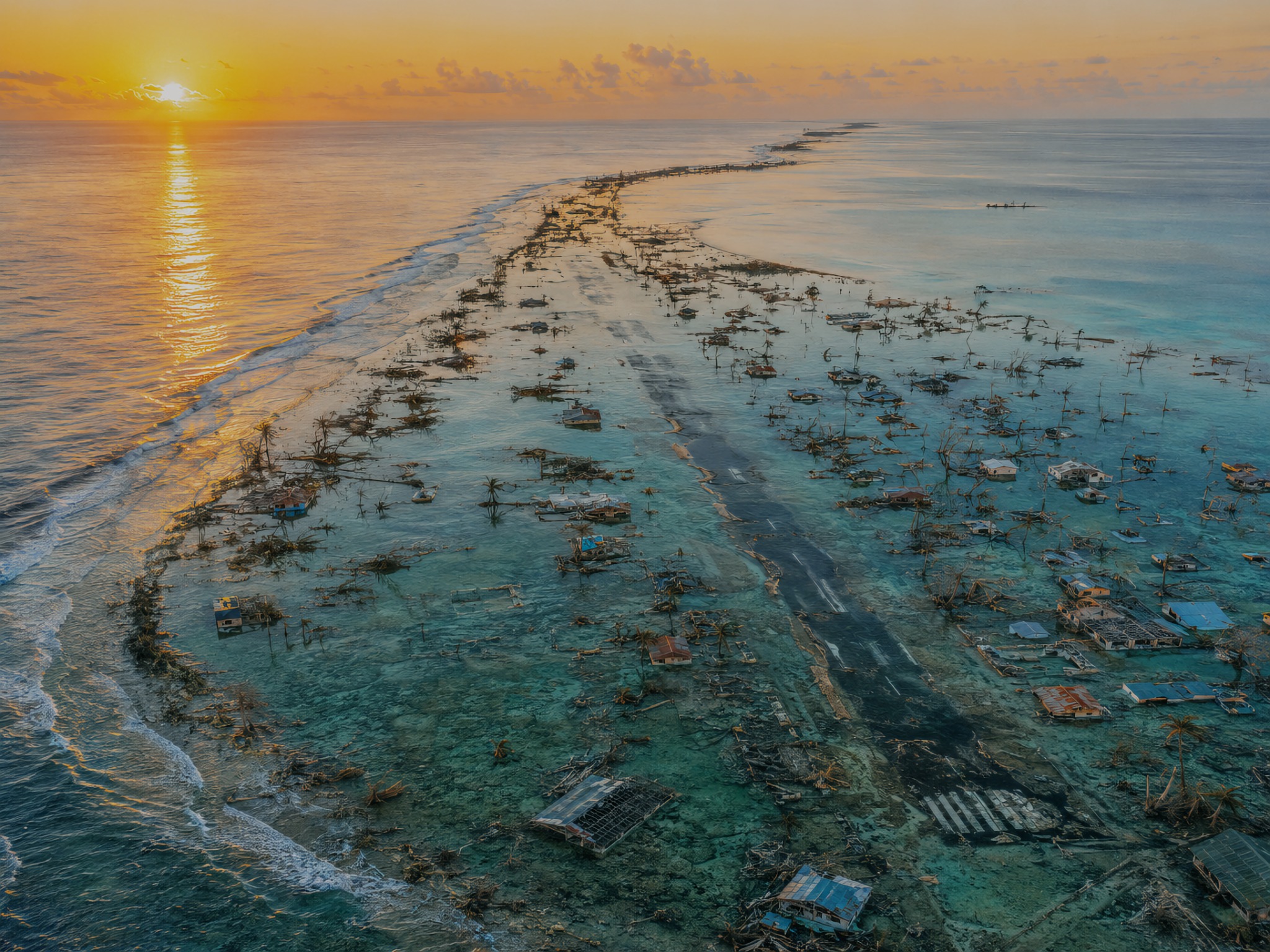
A recent image shows the ruins of Funafuti International Airport in Funafuti, Tuvalu. Once home to over 6,000 people, the atoll is now uninhabitable. Modified from Oetti42, “Aerial view of Runway 21 in 2025.”
A 2023 migration arrangement between Australia and Tuvalu, an island nation in the South Pacific, became a model for later agreements. Under the Falepili Union Treaty, up to 280 Tuvaluans each year (out of a population of less than 10,000) could become permanent residents of Australia. There they could live, work, and study while continuing to travel back to their homeland.
By the 2060s, a succession of island governments signed similar treaties with countries around the world. Some island populations stayed together after they moved to new countries, forming communities that received special recognition from the governments of those countries – akin to that given to Indigenous nations in Australia, Canada, or the United States. When some islands became truly unlivable, their governments finally moved with their populations, and most claimed partial authority over the transplanted communities. It was almost as if island populations, cultures, and states had moved across the world, to durable land.
But the sovereignty of island states now depended on the largesse of governments in the countries to which they had removed themselves. Governments of these countries provided islanders with more or less sovereignty, or changed sovereignty agreements from one election to another. Disputes over sovereignty stoked violent resistance in some transplanted communities. Yet there was no getting around a harsh reality: island nations were now only a part of much larger polities.
The population of Tuvalu’s neighbor, the Republic of Kiribati, therefore charted a different path. Rather than moving under one formal agreement, people from Kiribati left in diverse ways. Some joined government-supported relocation schemes. Some took jobs overseas. Others moved to live with relatives who had already settled abroad.
In the end, an island nation dissolved, and its government disbanded. But people have left on their own terms, without the paternalistic assistance of a colonial state.
Meanwhile, tropical cyclones were changing. The total number of storms didn’t rise everywhere. Instead, the strongest storms became ever more intense, while rainfall rates increased. More and more storms also intensified with explosive speed, and higher seas amplified storm surges.
In 2055, 2058, and 2062 – across the Philippines, China, and Mexico – tropical cyclones repeatedly made landfall with sustained winds that exceeded 330 kilometers per hour. The unprecedented intensity of the storms, combined with the rapid growth of coastal populations and economies, meant that each cyclone killed thousands, and each inflicted over $750 billion in damage (in 2060 USD).
In the United States, the National Hurricane Center added a new category – 6 – to the Saffir–Simpson Hurricane Wind Scale. Meteorological agencies in several other countries soon adopted equivalent categories.
Clearly, governments had not cut greenhouse gas emissions quickly enough to prevent the emergence of a new, much more dangerous climate.
2046-2091: Jakarta's Long Retreat
Jakarta wasn’t in the usual path of even the new, supercharged typhoons. But it was exceptionally vulnerable to flooding – because as sea levels rose, the city itself was sinking.
Decades of unsustainable groundwater pumping had drained and squeezed together the soft sediments beneath northern Jakarta. The ground sank in response, but this subsidence varied greatly from place to place. Early 21st century studies measured typical rates of subsidence in northern Jakarta at several centimeters per year. But in some neighborhoods, the land was sinking at around 20 centimeters per year – more than the sea could rise in a decade.
Already in 2022, the government started building a new capital – Nusantara – to move institutions out of an overcrowded, sinking metropolitan area. Yet relocating the capital wasn’t the same as moving one of the world’s largest urban populations, let alone the infrastructure – from businesses to ports to roads – that made Jakarta Indonesia’s economic center. In fact, millions continued to migrate to Jakarta from a countryside increasingly wracked by floods and droughts.
Adaptation bought time. New reservoirs and piped-water systems reduced groundwater extraction in some districts. Engineers built sea walls, dredged rivers, improved pumps, and elevated thousands of homes. Governments, local communities, and non-governmental organizations restored mangroves, natural defenses against the sea that trap sediment and reduce erosion.
Yet protection tended to follow wealth and political influence, more than need. Business districts, ports, and affluent neighborhoods received the strongest defenses. By contrast, some of the city’s poorest neighborhoods, alongside rivers and canals, were demolished in the name of flood control. Residents were moved to distant housing with poor transportation networks and few nearby jobs.
In the 2070s, Indonesian authorities adopted a policy they called managed retreat, though few experienced it as orderly or voluntary. Jakarta’s northern neighborhoods, outside the main defenses against the sea, were converted into retention basins, wetlands, aquaculture zones, or open water. Millions complained that compensation rarely matched the value of lost homes and livelihoods. And some families moved repeatedly as supposedly safe districts flooded, one after the other.
Then, in 2091, an exceptionally strong La Niña cooled the central and eastern tropical Pacific, further concentrating warm waters in the western Pacific and strengthening the Asian–Australian summer monsoon. Months of unusually heavy rainfall swelled rivers until an unprecedented downpour coincided with a spring tide.
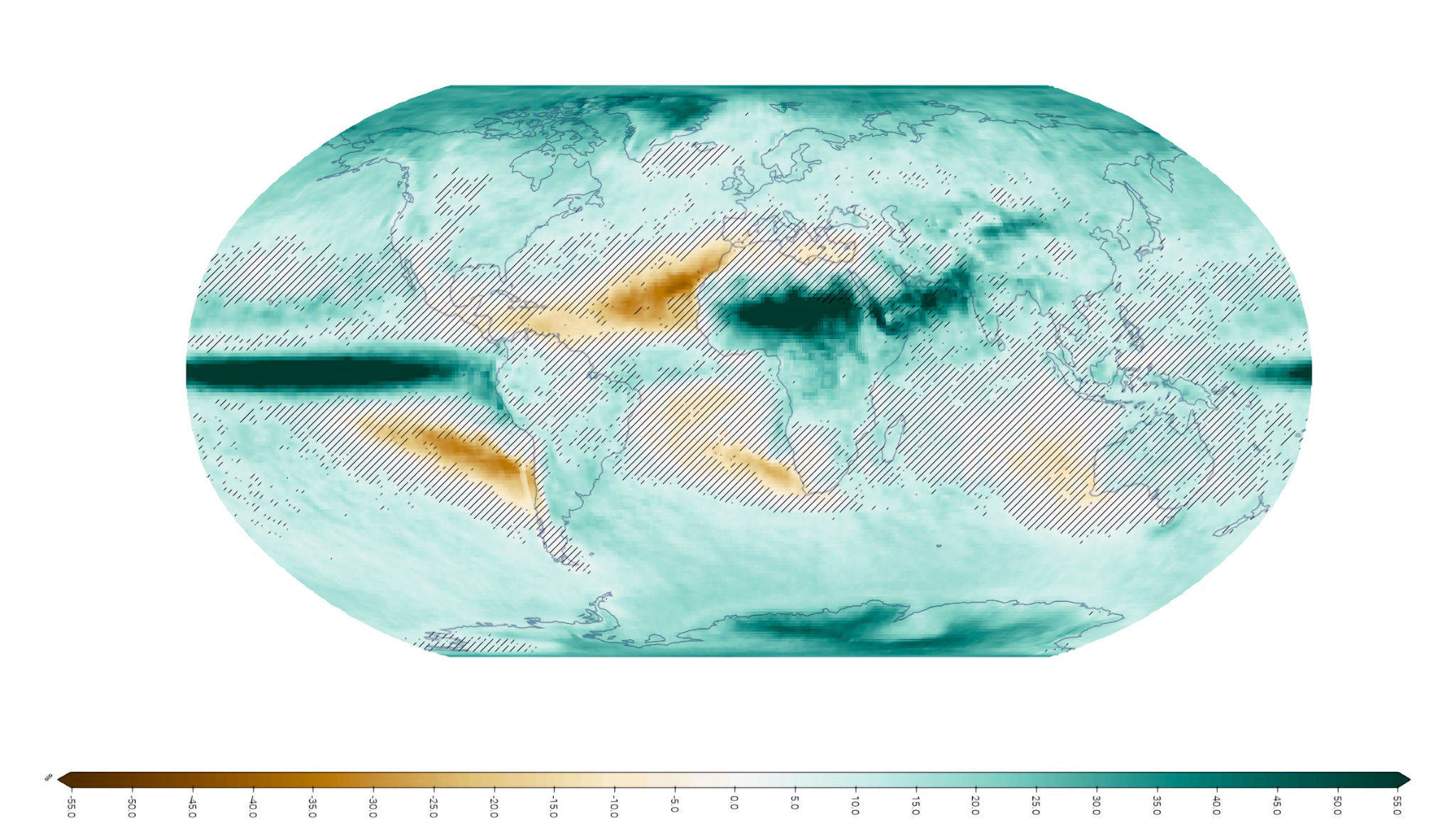
This map simulates changes in maximum five-day precipitation in 2100 when Earth has warmed by 3 °C, under scenario SSP5-8.5. The baseline is 1850–1900. It is a modified version of an image obtainable from the IPCC WGI Interactive Atlas. Source: Intergovernmental Panel on Climate Change, “WGI Interactive Atlas,” accessed August 10, 2026.
Several pumping stations lost power, and sections of an aging coastal barrier failed. Floodwaters surged into Jakarta, mixing with sewage and industrial waste. The immediate death toll was lower than it would have been earlier in the century, both because forecasts had improved, and because governments and individual families were more prepared for evacuation. But thousands still drowned, and a humanitarian crisis lasted for weeks. Diarrheal disease spread through crowded shelters, hospitals ran short of clean water, and food prices soared. These indirect consequences of the flood might have killed over 100,000 people.
My family’s home was on the second floor of a sprawling apartment complex. It was far inland, in a district officials had classified as defensible. We thought we were safe.
But just after sunset on March 3rd, 2091, we learned that water had surged into our neighborhood. Our parents didn’t know what to do at first. People were crowding the streets. Everyone was panicking. I still remember the shouting of the grown-ups, the crying of the children – and the look in my father’s eyes.
After a few hours, we packed our bags. Just a few; my mother didn’t believe that the flood could reach our apartment. We pushed our way through the crowd, to the car, and inched out of our neighborhood in heavy traffic.
Later, we learned that the water had peaked above the third floor. We lost everything we hadn’t packed. But because my mother worked for the civil service, we had housing rights in Nusantara. We could rebuild.
Many of our neighbors weren’t so lucky. Some moved into camps beyond the new capital. Others stayed with relatives or returned to flooded neighborhoods as soon as the water receded.
And many had drowned.
Jakarta was never wholly abandoned. Its southern and central districts are still home to millions. Fortified corridors connect the port to the national economy. But much of the northern city is now a wasteland of crumbled buildings, polluted wetlands, and submerged memories.
Tour companies organize boat trips that take foreigners among the ruins. Business is good. The national government promotes disaster tourism. Officials say it shows foreigners that Indonesia adapted to the rising waters.
But that word – adaptation – doesn’t capture what it meant to lose a home. A place we thought would last forever.
2050-2080: The Living World Contracts
The breadbasket failure changed more than human politics. Emergency efforts to expand farmland, resettle displaced people, and secure timber and minerals increased pressure on ecosystems. Many of these ecosystems were already breaking down, owing not only to the changing climate, but also to pollution, pesticide use, invasive species, and habitat loss.
Overall, most ecosystems might have been able to adapt to warming temperatures. But climate change only exacerbated the damage caused by the way governments and corporations had used up the world’s environment. Many ecosystems collapsed because they were already near their breaking points.
The Amazon rainforest provided the clearest example.
Midway through the 21st century, the rainforest still covered much of the Amazon basin, which in turn stretched across nearly half of South America. The forest created much of the rain that allowed its own plants to grow. Its trees drained water from the soil, then released it through their leaves, allowing moisture to be recycled across the Amazon basin.
Deforestation, repeated drought, and fire threatened this cycle. For decades, scientists had warned that parts of the forest could cross thresholds beyond which drying and tree loss reinforced one another. Some South American governments heeded those warnings, taking steps to curb deforestation and imposing more ambitious decarbonization targets. But others reversed those policies.
Then, in the 2060s, the Amazon began to break down. The forest didn’t wither all at once, or in a single year. Instead, the southern and eastern Amazon slowly transitioned into a mosaic of fire-prone, degraded woodland, open savannah, and – increasingly – maize and wheat fields.
In the north and west, wetter regions survived, especially where Indigenous territories and protected areas limited clearing. But countless species, many still unknown to science, either lost much of their population or went extinct. The Amazon basin as a whole became a net producer, rather than an absorber, of carbon dioxide, slowing efforts to reduce atmospheric greenhouse gas concentrations.
In a way, the Amazon limped on like Jakarta. If you were in the right spot, it seemed like little had changed. But overall, it was a shadow of its former self.
Boreal forests changed in a similarly uneven way. Trees and shrubs spread north into warming tundra. But every summer – across Alaska, Canada, Scandinavia, and Siberia – heatwaves, droughts, invasive insects, and enormous fires devastated forests along their southern margins.
Smoke became a recurring public-health emergency across North America, Europe, and Asia. In some years, burned forests and thawing soils released so much carbon that northern ecosystems also became a source of greenhouse gases, rather than a sink.
Many ecological disruptions involved timing. Plants flowered earlier than before, but some insects emerged with seasonal changes in lighting that had increasingly little relation to temperature. Migratory birds, following instinct, arrived after peak food supplies had passed. These mismatches did not affect every species in the same way, but they destabilized relationships between plants and animals that had developed over thousands or even millions of years.
Wild pollinator populations crashed in many heavily farmed regions. Farmers responded with managed bee colonies, robotic pollination, and, for a few expensive crops, hand pollination. Those substitutes kept markets supplied, but they increased food prices – and they didn’t recreate ecosystems that had once provided pollination for free.
Warm-water coral reefs suffered the most visible collapse. Already in the early 21st century, marine heatwaves bleached reefs before they could recover. Meanwhile, carbon dioxide from the atmosphere entered seawater, making it more acidic. That in turn made it increasingly difficult for corals to grow their skeletons, and other invertebrates to grow their shells.
By the 2060s, the Great Barrier Reef no longer functioned as a single, connected ecosystem. Several scattered, carefully maintained reefs survived off Northeastern Australia, but the extraordinary biodiversity that had characterized the region was gone for good.
Reefs around the world experienced similar breakdowns, albeit on a smaller scale. Some algae, sponges, fish, and some heat-tolerant corals clung to life. But by the late 2060s, the beautiful, three-dimensional reef structures that had sheltered countless species, protected coasts, and supported fisheries had largely disappeared.
A century ago, prominent scientists and journalists announced that the sixth mass extinction in Earth’s history had already begun. At that time, some biologists protested that species losses hadn’t reached the scale that defines a mass extinction. Others stressed that extinction rates were difficult to measure.
Today, AI systems confirm that those rates are rising at alarming speeds.
Warming near 3 °C has pushed already threatened species beyond recovery. And it has driven previously thriving populations to the brink of collapse.
Stabilizing temperature prevented still greater losses. But it did not bring the vanished species back.
2060-2090: Disease in a Rearranged World
Nearly a century ago, biologists determined that warming had started to alter the geography of disease.
By the 2060s, the world was clearly becoming a less healthy place. Warmer temperatures allowed mosquitoes and ticks to survive at higher elevations and latitudes. Floods created mosquito breeding sites and disrupted sanitation. Deforestation and agricultural expansion brought people, livestock, and wildlife into new forms of contact, creating opportunities for pathogens – the microscopic causes of disease – to spread to new hosts.
None of this meant that climate change automatically produced pandemics. A pathogen still had to cross into people, spread efficiently, and evade public-health defenses. But environmental disruption created more opportunities for those steps to occur.
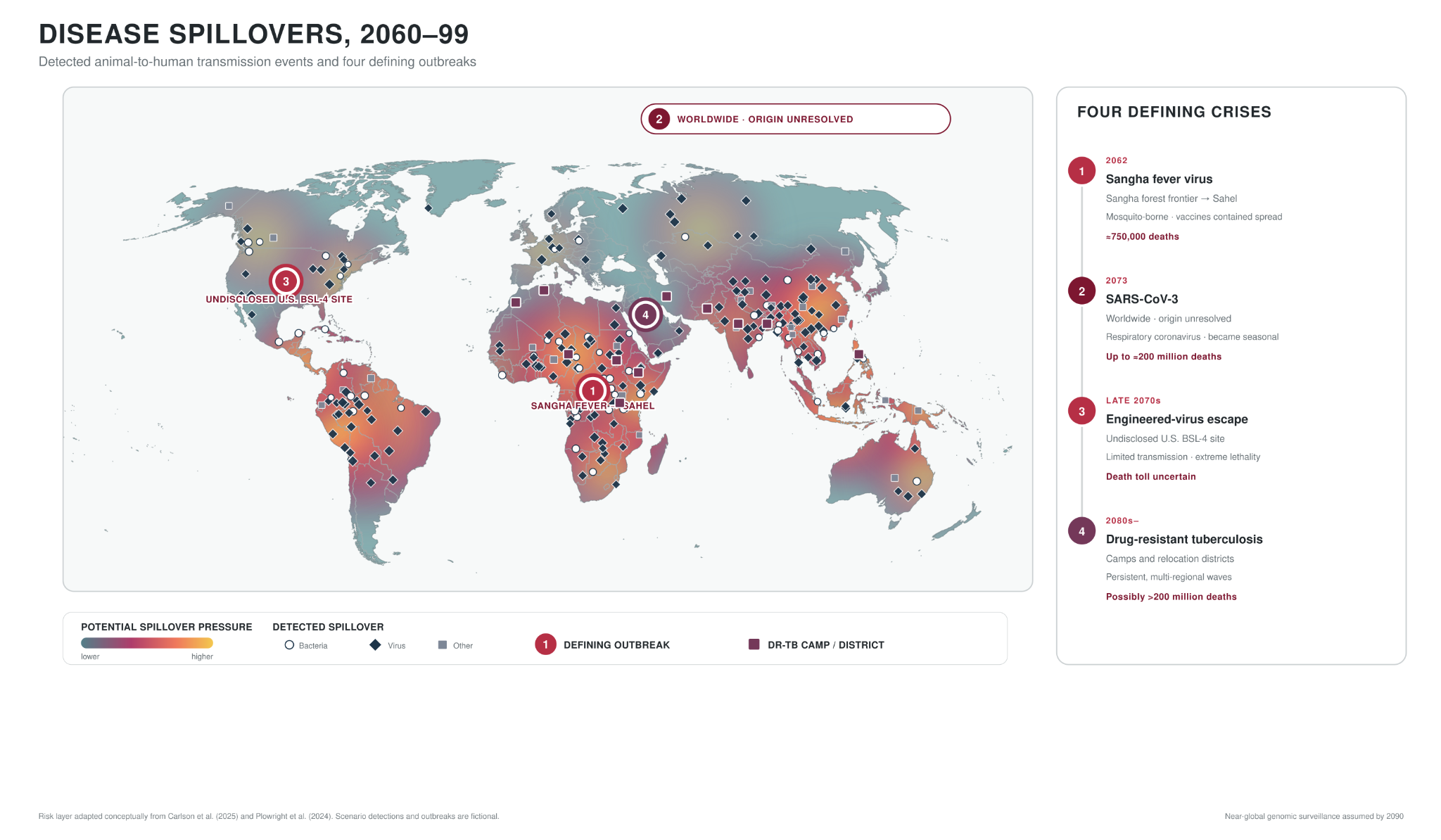
A map of pathogen spillovers, from animals to humans, showing four major disease outbreaks in the late 21st century. This simulation is based on Figure 1D in Carlson, Colin J. et al. “Pathogens and Planetary Change.” Nature Reviews Biodiversity 1 (2025): 32-49.
Four outbreaks came to define the second half of the century. In 2062, a mosquito-borne virus emerged in a heavily disturbed forest region of Central Africa and spread through parts of the Sahel. Vaccines eventually contained it, but only after it killed an estimated 750,000 people, most of them in places with weak health systems.
Beginning in 2073, a new coronavirus, eventually named SARS-CoV-3, caused a worldwide respiratory pandemic. Its estimated death toll, depending on how indirect deaths were counted, might have approached 200 million. Like COVID-19, it never disappeared completely; descendants of the virus still circulate as seasonal infections.
As the world struggled to recover, a new virus, engineered by an AI, escaped containment from an American Biosafety Level 4 (BSL-4) laboratory. The virus was not nearly as contagious as other engineered pathogens stored at BSL-4 facilities. But it was extraordinarily deadly, and it sparked widespread panic.
The fourth crisis was less dramatic but more persistent. Beginning in the 2080s, waves of drug-resistant tuberculosis swept through camps and relocation districts that now housed hundreds of millions of climate refugees. It is still difficult to estimate how many died. Some AI systems suggest that the death toll was ultimately greater than that of the CoV-3 pandemic.
Governments responded to these disasters by building global pathogen-surveillance systems that rapidly sequenced the genomes of emerging viruses and bacteria. They constructed AI-enhanced vaccine factories, and imposed new indoor-air standards for schools and workplaces. Cheap diagnostic devices allowed people to detect infections at home, and helped health officials stop outbreaks before hospitals filled.
Some groups rejected new policies and technologies. Pathogens engineered with AI continued to pose terrifying threats to global health. But for the time being, new measures ensured that, outside of refugee camps, most disease outbreaks remained local.
Is that a success? As usual, it depends on who and where you are.
2070-2100: Unequal Stabilization
The clearest pattern in the history of global warming is that responsibility for risk and exposure to risk were rarely, if ever, shared by the same people.
In the nineteenth century, Great Britain released more carbon dioxide than any other state. In the 20th century, the United States became the largest cumulative emitter. In the 21st century, China took its place. Wealthy fossil-fuel exporters in the Middle East also shared responsibility for a large share of global emissions.
Many people in these countries benefited, directly or indirectly, from the industries that changed the climate. Wealth created by those industries also helped give governments the money, technology, and administrative capacity to make their populations more resilient in the face of climate change.
New York, Shanghai, and Singapore, for example, expanded seawalls, pumps, and floodable parks. Gulf cities built desalination plants and cooled transit systems. Wealthy households everywhere bought backup batteries, air filtration, insurance, and homes in safer locations.
Granted, there was no way to be perfectly safe in a warming world. But money reduced mortality and accelerated recovery.
Poor countries and poor neighborhoods faced the same hazards with far fewer defenses. Insurance withdrew from exposed coasts and fire-prone regions. Outdoor workers lost income during heat emergencies. Residents of informal settlements were excluded from official compensation, because they lacked legal title to their homes.
Climate adaptation was often described as a technical challenge, an engineering problem. But the success of adaptation depended less on the infrastructure societies built than on decisions about who would be protected, who would pay, and whose losses would count.
In the 2060s, the prospect of massive migration from the Global South to the Global North finally led to decisive expansion of international climate finance. The Climate Recovery Compact provided a foundation for developed nations to expand the Loss and Damage Fund, which had been created decades earlier to help vulnerable countries cope with losses they could no longer prevent through adaptation.
New grants financed sea walls, drought relief, the relocation of displaced communities, and the rebuilding of electrical grids. Receiving countries used the prospect of migration to acquire some power over how funds were spent. Even so, the sums remained modest compared to the value of lost land, cultures, ecosystems, and lives.
Money could help a family move; it could not recreate a place that was gone forever.
The camps around Nusantara embody this complex history. The new capital offered jobs, schools, and safer ground. But housing construction never matched migration. Some neighborhoods that began as emergency settlements in 2091 now have paved roads and elected councils. Others still lack sewers and secure land rights.
My family remembers our move as an escape. Many of our former neighbors remember the same event as an expulsion. Both memories are true.
2080-2100: Overshoot and the End of Warming
Climate scientists say we are experiencing an overshoot: a temporary rise in global temperatures above the 2 °C limit of warming that governments had long promised to avoid.
The overshoot began in 2046. It peaked in the late 2080s, when global temperatures reached 2.95 °C above their average in the late 19th century. And it’s ending, because Earth’s temperature has finally started to fall.
Today, Earth’s temperature is still around 2.8 °C above the late 19th-century average. It’s projected to decline further during the 22nd century – if carbon dioxide removal continues, and if the bulk of the world’s forests survive.
The word “overshoot” can sound reassuring. It’s as though the world’s temperature briefly crossed a dangerous line, then returned to safety.
That isn’t how it felt. Even when temperatures began to fall, every year brought heatwaves, droughts, and floods that killed tens of thousands of people.
Many consequences of warming can’t just reverse themselves now that temperatures are declining. Extinct species are gone for good. Glaciers crossed thresholds that commit them to centuries of additional melting. Coral ecosystems that took millennia to build can’t be recreated.
Climatologists had long warned that overshoot increased the odds of pushing parts of Earth’s climate system across tipping thresholds. But tipping points were never tripwires – and luckily, many failed to materialize.
The AMOC weakened, but it didn’t collapse. The Amazon is degraded, but it hasn’t disappeared. The great ice sheets lost mass, but there was no sudden collapse into the ocean, as some scientists had feared in West Antarctica.
In a sense, humanity was fortunate.
The slight decline in temperature also didn’t depend on geoengineering: deliberate efforts to cool Earth’s climate. After 2046, governments repeatedly debated injecting reflective particles into the stratosphere. Those debates intensified with the disasters of the 2050s and 2060s.
But stratospheric aerosol injection, as it’s called, never went anywhere.
Governments simply couldn’t agree on which state or entity would be responsible for releasing the particles. They couldn’t decide how to attribute extreme weather to the intentional modification of the climate, rather than global warming or natural climatic variability. They couldn’t determine how to compensate states for this weather, what the ideal temperature of the Earth should be, or how to protect geoengineering efforts during wars between states.
So, the world relied on decarbonization and carbon dioxide removal.
Many lamented that this approach could only have kept warming below dangerous levels if governments had seriously committed to it earlier: in the twentieth century, or even the early 21st century. By the middle of the 21st century, decarbonization alone couldn’t prevent warming from peaking at just under 3 °C, relative to the world’s average temperature in the late 19th century.
But unlike geoengineering, decarbonization addressed the physical cause of warming. It didn’t just mask the effects of that cause. That made it a true solution, not a precarious quick fix.
Reaching net zero emissions didn’t end climate policy, because net zero requires constant work. Aging infrastructure still has to be replaced. Forests still need to be preserved, and underground carbon storage reservoirs require constant monitoring.
Emerging political movements continue to blame all social ills on decarbonization. Some call for a return to the better days of the 20th century. Populist movements seek to restore the greatness of the world’s former oil, gas, and coal producers.
But the world’s energy system seems to have moved on for good. Efforts to revive the fossil fuel industry appear doomed to failure.
2100: Success, But at What Price?
In a narrow but important sense, we can look back on the 21st century with pride.
Around the world, many governments, corporations, and individuals responded constructively to the Great Hunger of 2046. Within decades, they had all but completed a total restructuring of energy, transportation, industrial, and agricultural systems. Food systems recovered, global populations continued to inch upwards – and the climate stopped warming.
The Earth remains broadly habitable, and home to a functioning, global civilization.
But habitable is such a low standard. Keeping Earth habitable doesn’t mean that every place remained livable, every culture survived, or every community received a fair chance.
Today’s world is a diminished place. My generation inherited an Earth with fewer species, smaller ice sheets, higher seas, harsher heat, and cities divided between protected enclaves and abandoned districts.
Jakarta captures the contradiction.
The metropolis survives, and Indonesia’s economy has grown with the clean-energy transition. Yet my childhood neighborhood lies inside a tidal basin. My parents' apartment edges above the waves only at low tide.
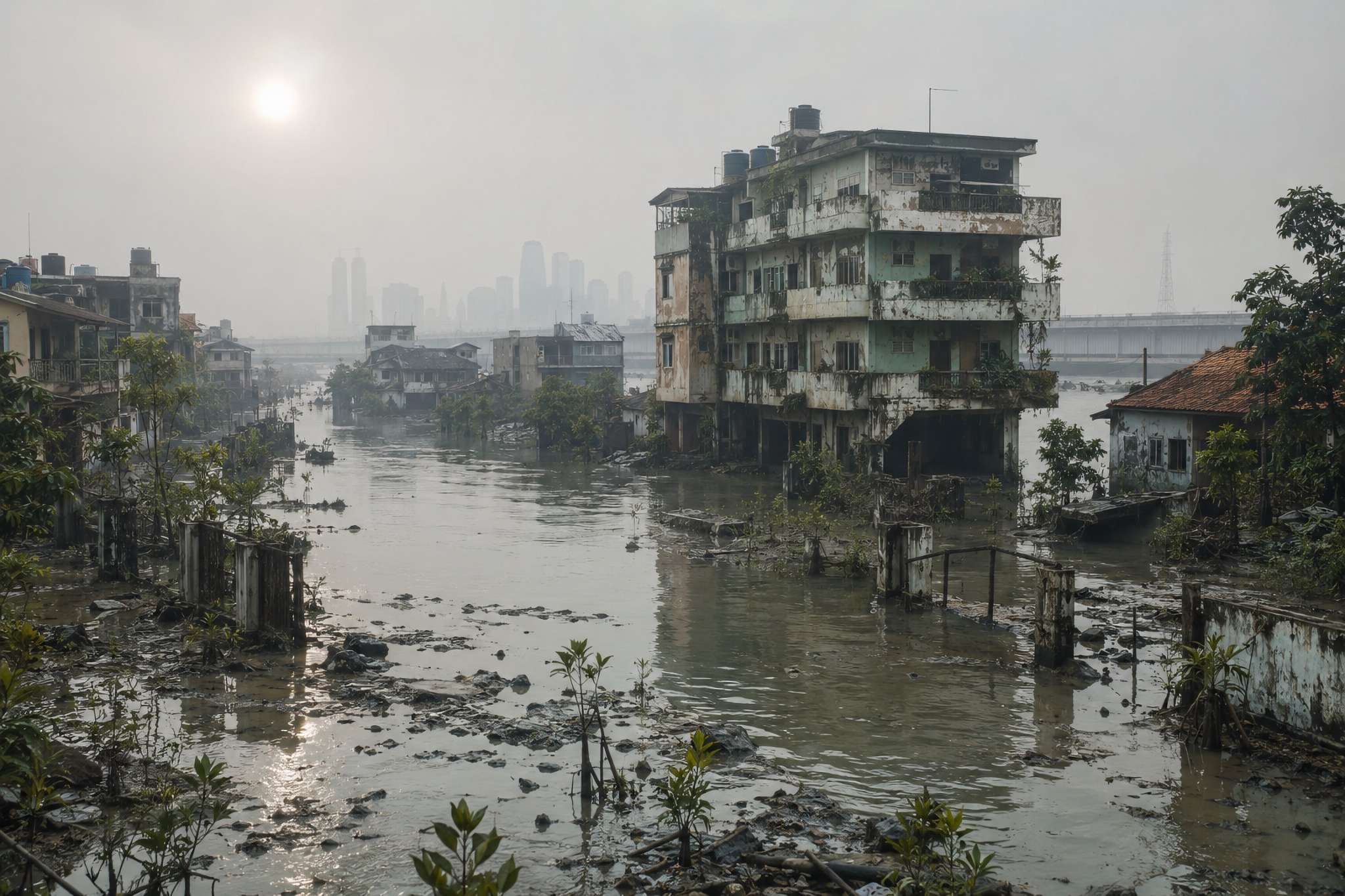
A tourist's photo at low tide of my family's apartment building, nine years after the flood that submerged it.
People who lived through the Great Hunger liked to say that despair was a luxury the world could no longer afford. They were right. Because they acted, my generation has a future.
But action came only after decades of delay made tragedy unavoidable.
We know who to blame for all that’s been lost. They’re the politicians, business leaders, and pundits who prioritized wealth, fame, or power over humanity’s future. They knew that the world was warming. They also knew that the worst consequences would wait until long after they died.
In their day, I suppose they were remembered fondly. They achieved admirable wealth and power. They supported institutions and political movements. They were benefactors and family men.
But we are their victims. We, who were not yet born. Our lives were a distant prospect. A meaningless abstraction.
Now, we control their legacy. And we will ensure that their selfishness – their shortsightedness, their cruelty – is never forgotten.